Burial and flame cremation are still the choices most people know, but they are no longer the only ones. Depending on where you live, you may also be able to choose green burial, alkaline hydrolysis (often called aquamation or water cremation), or natural organic reduction, commonly called human composting.
The important distinction is between an option being legal in a state and being available from a provider near you. Those are not the same thing. Laws, licensing, cemetery rules, and local services change, so treat this guide as a starting point and verify the details where the disposition will actually take place.
What are the main alternatives to traditional burial?
- Green or natural burial: burial without conventional embalming, usually in a biodegradable container or shroud and without a concrete vault where cemetery rules allow.
- Flame cremation: cremation by heat and flame, followed by processing of the remaining bone fragments.
- Alkaline hydrolysis: a water-based process using heat and alkaline chemistry rather than flame.
- Natural organic reduction: a controlled process that converts human remains into soil-like material over a period of weeks.
- Traditional burial: cemetery burial that may include a casket, embalming, and an outer burial container, depending on the family's choices and cemetery requirements.
What is green burial?
Green burial reduces the materials and processes commonly used in conventional burial. The body is generally not embalmed with conventional chemicals and is placed in a biodegradable casket, container, or shroud. Cemeteries that offer green burial may be hybrid cemeteries with a designated section, natural burial grounds, or conservation burial grounds connected to land protection.
Do not assume green burial will automatically be cheaper. It can eliminate expenses such as embalming, an elaborate casket, or a vault, but land, transportation, grave opening and closing, and provider fees still vary.
Is embalming required for burial?
Federal law does not require embalming. State or local rules can apply in particular circumstances, and funeral providers must follow those requirements. The FTC Funeral Rule also requires providers to disclose that embalming is not necessarily required by law.
If avoiding embalming is important to you, ask the funeral home what circumstances would require it and what alternatives they offer.
Do you have to buy a burial vault?
State laws do not generally require a vault or grave liner, but individual cemeteries may require an outer burial container to reduce ground settling. Ask the cemetery directly rather than assuming the funeral home package is mandatory.
The FTC requires funeral providers to give consumers itemized price information and prohibits misrepresenting legal or cemetery requirements.
What is aquamation or water cremation?
Alkaline hydrolysis uses water, heat, pressure in some systems, and alkaline chemicals to accelerate the natural breakdown of the body. The remaining bone material is processed and returned to the family in a form similar to cremated remains.
People often consider it because the process does not use direct combustion. Availability is the practical hurdle: a state may permit alkaline hydrolysis even when no nearby provider offers it.
What is human composting?
Natural organic reduction places the body in a controlled environment with organic materials so natural decomposition produces soil-like material. The process and rules for receiving, transporting, or placing the resulting material vary by jurisdiction and provider.
If this option appeals to you, ask two separate questions: whether it is authorized where the disposition will occur, and whether a licensed provider is actually accessible to your family.
Is cremation still a reasonable option if environmental impact matters?
There is no single answer that fits every family. Flame cremation uses energy and produces combustion emissions, while burial uses land and can involve manufactured materials, grounds maintenance, and transportation. Alternatives have their own energy, facility, and transportation requirements.
If environmental impact is your priority, ask providers for specifics rather than relying on labels such as "green" or "eco-friendly." Distance matters too. Transporting a body long distances to reach a specialized provider can change the practical equation.
What can you do with ashes or other remains?
Families may keep remains, bury them, place them in a columbarium, divide them among relatives, incorporate a small amount into a keepsake, or scatter them where permitted. Rules depend on the property involved. Public lands, waterways, cemeteries, and private property may each have different requirements.
For scattering at sea in the United States, review current EPA requirements before making arrangements.
How do you choose between burial, cremation, and newer options?
Start with practical questions before comparing aesthetics:
- What did the person actually want?
- Is the option legal where the disposition will occur?
- Is there a provider within a reasonable distance?
- What is the full itemized cost, including transportation and cemetery or facility charges?
- Does the option work with the family's religious, cultural, or personal beliefs?
- Will the family still be able to hold the kind of funeral, memorial, or gathering they want?
- What happens to the body or remains at the end of the process?
What should you put in writing if you are planning ahead?
Write down the disposition you prefer, any acceptable alternatives, and how strongly you feel about the choice. Include enough information that your family knows whether your preference is firm or whether they have room to adapt if the option is unavailable.
Then tell the people who may be responsible for carrying it out. A preference hidden in a drawer is easy to miss during the first few days after a death.
For the larger set of decisions worth documenting, see our end-of-life planning checklist. If you are thinking about the gathering itself, see celebration of life ideas.
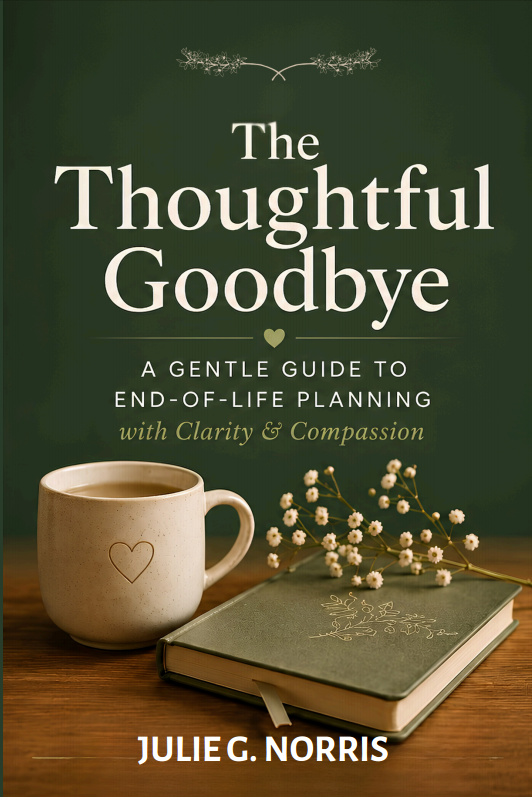
Making your wishes easier to find
The Thoughtful Goodbye helps you record burial, funeral, practical, digital, pet-care, and personal wishes before someone else has to guess.
See what's inside the book →