A celebration of life does not need to look like a traditional funeral with the furniture moved around. It can be formal or casual, religious or secular, large or very small. The useful question is simpler: What would make people walk away feeling they had spent an hour remembering this particular person?
Start with what was unmistakably theirs: the music they played too loudly, the food they always ordered, the place they loved, the hobby that filled the garage, or the stories everyone tells when their name comes up.
What happens at a celebration of life?
There is no required order. A gathering might include a welcome, a few stories, music, photographs, a reading, food, an open microphone, and a closing toast. It can also be as simple as people sharing a meal and talking.
If structure helps, use this basic outline:
- Welcome guests and explain what the gathering will be like.
- Share a short story or introduction about the person.
- Include music, readings, photos, or video.
- Invite selected speakers or guests to share memories.
- Close with a final song, toast, reading, ritual, or simple thank-you.
Where can you hold a celebration of life?
The location can do some of the storytelling for you. Consider a family home, garden, community room, restaurant, church, park, beach, clubhouse, library meeting room, favorite brewery, or another place that actually fits the person.
Before choosing an outdoor or public location, check permits, accessibility, weather backup, restrooms, parking, food rules, alcohol rules, and whether amplified sound is allowed.
How can you make the gathering feel personal?
- Serve a food or dessert the person loved instead of generic catering.
- Play their actual playlist, favorite album, or songs friends associate with them.
- Display ordinary objects with stories attached: gardening gloves, recipe cards, a fishing hat, concert tickets, tools, books, or a ridiculous mug they used every morning.
- Print a few photographs large enough to see across the room rather than covering every surface with tiny snapshots.
- Set out blank cards and ask guests to write one memory for the family to keep.
- Create a table for one hobby or chapter of life rather than trying to summarize an entire lifetime at once.
What can guests do besides listen to speeches?
Participation often makes a celebration feel warmer and less ceremonial. Guests can write memories, add photographs to a board, sign a book, bring a recipe, contribute songs to a playlist, plant something, light a candle where appropriate, or share a short story.
If you invite open sharing, give people a little direction. Asking for "one story that captures who they were" usually works better than simply handing someone a microphone.
What should you put on a memory table?
Use fewer objects with clearer stories. A memory table can include photographs, letters, medals, favorite books, artwork, travel souvenirs, recipe cards, hobby items, or something handmade by the person.
If an item is valuable, fragile, or irreplaceable, display a photograph of it instead.
What do you say at a celebration of life?
You do not need a formal eulogy, but a short welcome helps people settle in. You can say who the gathering is for, thank people for coming, and explain how guests will be invited to participate.
If you are giving a longer tribute, our guide on what to say in a eulogy can help you shape it around a few specific stories rather than a list of accomplishments.
Can a celebration of life be funny?
Yes, when the humor comes from real affection and suits the person. A story about a terrible sense of direction, an overfed dog, a running family joke, or an obsession everyone recognized can make the room feel more honest.
You do not have to make grief cheerful. Laughter and sadness can sit in the same room without canceling each other out.
What if the person was complicated?
You are not required to turn someone into a saint because they died. Choose memories that are true and appropriate for the people present. You can acknowledge a complicated relationship without using the gathering to settle old arguments.
For more on that, see grief when the relationship was complicated.
How long should a celebration of life last?
There is no standard length. A planned program of 30 to 60 minutes followed by time to talk and eat works well for many families, but a backyard gathering may simply run for an afternoon. Build enough structure that guests know what is happening, then leave room for conversation.
What if you cannot afford a large memorial?
Personal does not have to mean expensive. A potluck at home, a picnic, a slideshow in a community room, a walk on a favorite trail, or coffee and stories around a kitchen table can be more recognizable than a costly event designed around somebody else's idea of a funeral.
If you are planning your own celebration of life
Write down the few things you care about most. If there is a song you want played, a place you prefer, a person you hope will speak, or something you definitely do not want, say so. You do not need to choreograph the whole day.
Add those wishes to your end-of-life plan and tell someone where they are kept.
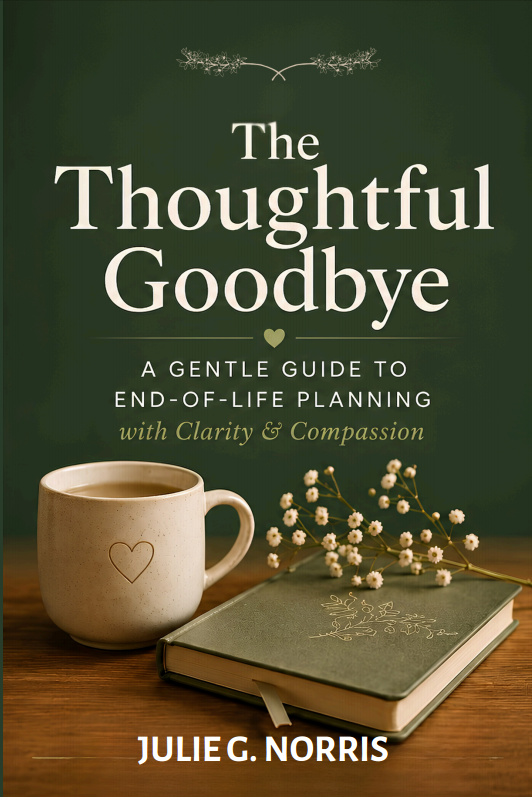
Leave the details that actually matter to you
The Thoughtful Goodbye helps you think through funeral and memorial wishes without turning the process into a hundred tiny decisions.
See what's inside the book →