If you are trying to get your affairs in order, the hardest part may be figuring out what "in order" actually means. A will matters, but it is only one piece. Your family may also need healthcare instructions, account information, funeral preferences, pet-care plans, and the location of ordinary things such as keys, records, and insurance policies.
You can build this plan a section at a time. Start with the information another person would need if you were suddenly unable to explain it yourself.
What should an end-of-life plan include?
A useful end-of-life plan usually covers these areas:
- Legal and estate documents
- Healthcare wishes and decision-makers
- Financial accounts, insurance, debts, and recurring bills
- Important contacts and the location of essential records
- Digital accounts and instructions for online files or profiles
- Funeral, burial, cremation, or memorial preferences
- Plans for pets or anyone who depends on you
- Personal belongings, heirlooms, and items with a story attached to them
- People who should know where the plan is kept
What legal and financial documents should you prepare?
The exact documents you need depend on your state, family, finances, and health. These are the ones many people encounter when putting a basic plan together.
- Will. A will explains how property governed by the will should be distributed and names the person responsible for handling the estate. It can also nominate guardians for minor children. A court makes the final guardianship decision.
- Trust. A trust is a separate legal arrangement that can hold and distribute property. It is not interchangeable with a will, and not everyone needs one.
- Durable power of attorney. This document can authorize someone to handle financial or legal matters if you cannot handle them yourself.
- Healthcare power of attorney. This names a person to make medical decisions for you if you cannot make them yourself.
- Advance directive or living will. This records your wishes about medical care in circumstances when you cannot speak for yourself.
- Beneficiary designations. Review the people named on retirement accounts, life insurance policies, and other accounts that pass by beneficiary designation. Those designations can operate separately from a will, subject to plan terms and applicable law.
- Financial account list. Record where you bank, invest, borrow, and hold insurance. Your family does not need account passwords in the same document. They do need to know the accounts exist.
If you already have these documents, check the names, addresses, agents, executors, beneficiaries, and backup decision-makers. A document you signed years ago may still be valid, but that does not mean it still reflects your life.
Where should you keep end-of-life documents?
Keep signed originals and important records somewhere secure that the right person can actually find. The best location depends on the document and your circumstances. Tell your executor, healthcare agent, or another trusted person where the originals are stored and how to reach them when needed.
A beautifully organized binder is no help if nobody knows it exists. The same goes for a safe, safe deposit box, locked filing cabinet, or digital vault.
What everyday information will your family need?
This is where many formal estate-planning lists stop too soon. After a death or serious medical crisis, families also end up looking for ordinary information that only one person knew.
- Where the will, deed, insurance policies, birth certificate, passport, and other records are kept
- Contact information for your attorney, financial professional, accountant, doctors, and insurance companies
- Mortgage or rent information and regular household bills
- Utilities, memberships, subscriptions, and automatic payments
- Vehicle information, keys, storage units, alarm codes, and other practical access details
- Instructions for anything in the home that someone else would not know how to manage
Think about the questions someone would ask during the first week without you. What bill is due? Who feeds the dog? Where is the spare key? Which company insures the house? Those details sound small until someone has to find them in a hurry.
Should you give your family your passwords?
Do not place a list of passwords in your will. A will may become part of a court record, and possession of a password does not automatically give another person legal authority to use an account.
A better approach is to create a secure inventory of your digital accounts and decide how access should be handled. Some password managers offer emergency-access features, and major technology companies have their own legacy or inactive-account tools. Review those options while you are able to make the choices yourself.
For a deeper walk-through, see what happens to online accounts after death.
What should you write down about funeral or burial wishes?
You do not need to plan every flower and song unless you want to. A few clear preferences can spare your family from having to guess about decisions that matter to you.
- Burial, cremation, donation, or another form of disposition
- Traditional funeral, graveside service, celebration of life, private gathering, or no service
- Religious, spiritual, cultural, or family traditions you want observed
- Open or closed casket, if relevant to your plans
- Music, readings, speakers, clothing, flowers, or charitable donations you care about
- Where you would like remains buried, scattered, stored, or otherwise handled, where legally permitted
If traditional burial or cremation does not feel right for you, our guide to alternative burial and disposition options explains some of the choices people are considering.
If you are thinking about prepaying for funeral goods or services, compare itemized prices and read the contract closely. Ask what happens if you move, change your mind, or the provider changes ownership.
Should you write your own obituary?
You can, and you do not have to write the polished version that will eventually appear in a newspaper or online. Even a rough page can help. Record the names, relationships, places, work, interests, accomplishments, quirks, and stories you would want someone to know.
It also gives you a chance to catch details other people might get wrong. Our guide on how to write an obituary can help you make a first draft.
What happens to your pets if you die?
Pets are easy to overlook in formal paperwork and impossible to overlook when someone suddenly has to care for them. Decide who you would ask to take them and talk to that person now. Do not assume they can or will say yes.
Write down the veterinarian's contact information, medications, food, routines, microchip details, behavior notes, and any boarding or grooming information. If money needs to be set aside for care, ask an estate-planning attorney how to structure that properly under your state's law.
What should you do about personal belongings?
Most families inherit more than financial assets. They inherit closets, boxes, photographs, furniture, recipes, collections, jewelry, tools, holiday decorations, and objects whose importance may make sense only to you.
If a particular item should go to a particular person, document that wish in a way that works with your estate plan. For sentimental items, it can also help to explain why the object matters. A note that says "this was your grandmother's mixing bowl" may mean more years later than the bowl's monetary value ever did.
You do not have to assign every possession. Concentrate on the things that could cause confusion, conflict, or regret if nobody knew the story.
Who should know about your end-of-life plan?
The people you name for important roles should know that you named them. They should also know where the signed documents and practical instructions are kept.
- Talk with your healthcare agent about the care you would and would not want.
- Tell your executor where your will and key records are stored.
- Confirm that anyone you hope will care for a child, pet, or dependent is willing and able to do it.
- Let a trusted person know how to locate your financial and digital account inventory.
The paperwork matters. So does the conversation. A person who understands why you made a decision is usually better prepared to carry it out than someone seeing the document for the first time during a crisis.
How often should you update your end-of-life plan?
Review it when something important changes: marriage, divorce, a birth or death in the family, a move to another state, a major change in health, a new home, a significant financial change, or a change in the people you trust to make decisions for you.
Even when nothing dramatic happens, an occasional review is useful. Contact information changes. Accounts close. Pets come into the family. Children grow up. The plan should describe the life you have now.
Where should you start if this feels overwhelming?
Pick the missing piece that would create the biggest problem for someone else. That might be making an appointment with an attorney, choosing a healthcare agent, writing down where your documents are, or creating a list of accounts.
Then stop for the day if you want to. End-of-life planning does not have to become a weekend project. A plan built in small, useful pieces still counts.
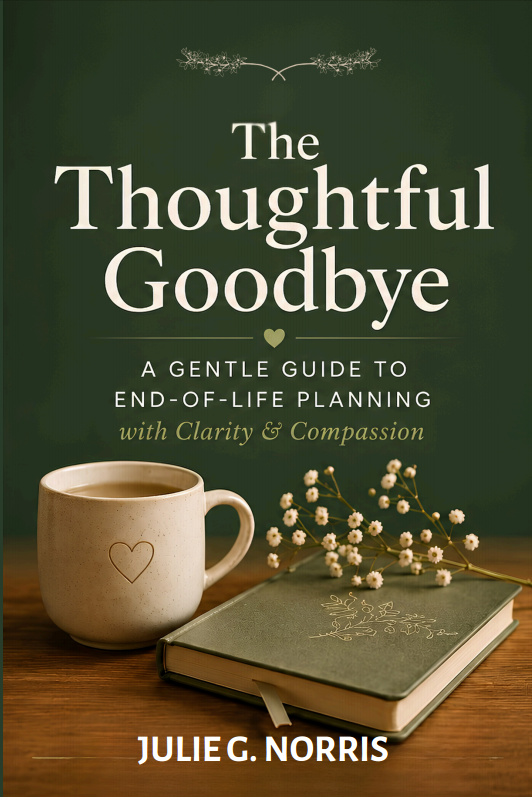
Want a place to work through all of this?
The Thoughtful Goodbye expands on the practical details families may need, from documents and digital accounts to pets, belongings, final wishes, and the things people forget to write down.
See what's inside the book →