Your family does not need to know every private detail of your life. They do need enough information to make decisions, find important records, protect your home and pets, and avoid guessing about the things that matter to you.
The goal is not to hand everyone a thick file tomorrow. It is to make sure the right people can find the right information when they need it.
Who should make medical decisions if you cannot?
Tell your healthcare proxy that you chose them. Talk about the values behind your decisions, not only the boxes you checked on an advance directive. The National Institute on Aging notes that loved ones do not always correctly predict end-of-life treatment preferences, which is why the conversation matters alongside the paperwork.
Make sure your proxy knows where the latest signed documents are and which doctors have copies.
Where are your important documents?
Someone should know where to find your will, advance directive, powers of attorney, insurance policies, property records, and other key papers. They do not need unrestricted access today. They need a map.
If the originals are in a safe, bank box, attorney's office, or locked cabinet, write that down and explain how an authorized person would get access.
What financial accounts and bills exist?
A family can spend weeks discovering accounts one statement at a time. Create a list of banks, retirement plans, investment firms, insurance companies, lenders, credit cards, and recurring household expenses.
Do not forget the small recurring charges: streaming services, storage units, software, memberships, lawn care, pest control, and automatic donations. The monthly amount may be small, but the confusion adds up.
What should happen to your digital life?
Decide what you want done with email, social media, cloud storage, websites, photographs, and other digital files. Use official legacy tools where available, and keep account access information securely rather than placing passwords in a will.
Our digital legacy guide explains the planning steps in more detail.
What do you want for your funeral or memorial?
You do not have to plan every detail. A few preferences can prevent a difficult family guessing game. Write down whether you prefer burial, cremation, donation, or another legal form of disposition; whether you want a funeral, memorial, celebration of life, or private gathering; and any religious, cultural, musical, or personal choices that matter.
If you truly do not care, write that down too. “Please choose what helps you” is information.
Who takes care of your pets?
Do not assume someone will take them. Ask. Choose a backup as well. Leave veterinary information, medication, food, routines, microchip details, and any money or legal arrangements intended for care.
See what happens to your pets if you die for a complete planning guide.
Which belongings actually matter?
Your family may know which furniture is expensive. They may not know which cheap object has the family story attached to it.
If something matters because of where it came from, label it or write the story down. If you want a particular person to receive something, make sure the plan is consistent with your legal estate documents.
What ordinary household information lives only in your head?
- Who has a spare key?
- Where is the alarm code or shutoff information?
- Who services the house?
- Where are vehicle titles and keys?
- Is there a storage unit?
- What should happen to plants?
- Is anyone depending on you for regular help or money?
These details rarely appear in legal forms, yet they can become the first questions after a crisis.
What do you want your family to stop worrying about?
This may be the most personal part. You can tell people they do not have to keep every possession. You can say you do not expect everyone to gather at a grave every year. You can say a particular tradition matters to you, or that it does not.
Clear permission can be as useful as clear instructions.
Where should you start?
Choose one person you trust and make sure they know where your important documents are. Then write down the information that would be hardest for someone else to reconstruct. You can add to it over time.
Our end-of-life binder guide gives you a practical structure for keeping it organized.
The practical details are the point
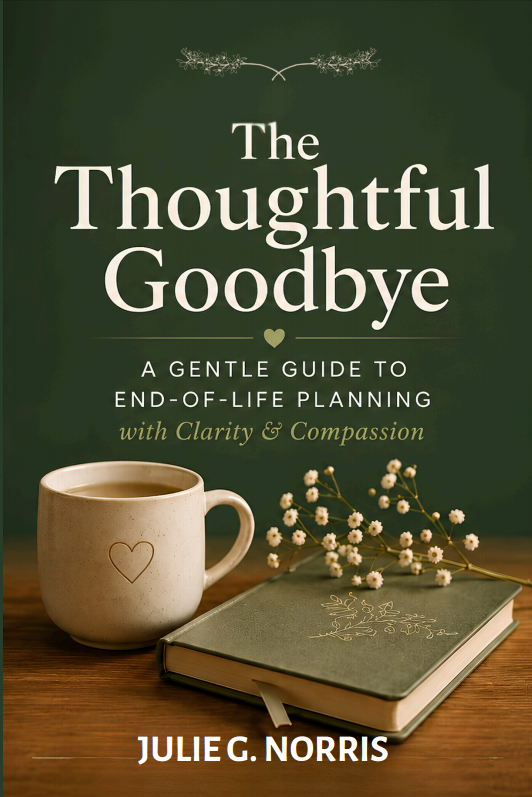
The Thoughtful Goodbye is built around the information families often need but formal documents do not explain.
See what's inside the book →