Eventually, someone may have to open your closets.
They will find the useful things, the valuable things, the things nobody recognizes, and the things everyone recognizes but nobody actually wants. A will can help determine who receives property, but it does not automatically solve the practical work of sorting a lifetime of belongings.
What does a will do with personal belongings?
A will can direct how property in your probate estate should be distributed. State law controls the requirements for a valid will and what happens when there is no will. Some estate plans address specific personal property separately or use a legally recognized memorandum, but the rules are not the same everywhere.
If an item is valuable, disputed, or especially important, do not rely on a sticky note as your entire legal plan.
Please do not make your kids take the china
This applies to china, furniture, collections, formal silver, hobby equipment, holiday decorations, and anything else you have quietly assumed someone will treasure because you did.
Ask people what they actually want.
You may discover that nobody wants the china but everyone wants one chipped coffee mug because it was the one you used every morning. Sentimental value does not follow retail value.
Tell the story of ordinary objects
An object loses context quickly after the person who knew the story is gone. A recipe card looks like paper. A bowl looks like a bowl. A cheap watch looks like something from a drawer.
Add a label, note, or photograph when the story matters:
- “Grandma used this bowl every Christmas.”
- “This was the watch Dad wore when he came home from the Navy.”
- “These photos are from Aunt Ruth's house in 1968.”
You are not trying to turn the house into a museum. You are preventing meaningful things from becoming mysteries.
What should you do with family photos?
Start with identification. Write names, approximate dates, and places where you can. Digital scans can make sharing easier, but keep a reasonable backup rather than assuming one cloud account will exist forever.
If you have thousands of nearly identical digital photos, deleting obvious duplicates now may be a greater kindness than leaving someone else to decide which 42 versions of the same sunset are important.
What about collections?
Coins, books, tools, art, records, dolls, sports memorabilia, craft supplies, and other collections can create two problems: nobody knows what is valuable, and nobody knows what you expect them to do with it.
If a collection has meaningful financial value, document what it is, how you bought it, any appraisal information, and the names of reputable dealers or organizations that understand it. If your only wish is “please donate all of this,” say that too.
Give people permission to say no
Belongings can become emotional obligations. Family members may keep furniture they do not like because getting rid of it feels like getting rid of you.
If you truly do not care, write it down. A sentence such as “Keep what brings you pleasure, and please donate or sell the rest without guilt” can remove a surprising amount of pressure.
Should you start giving things away now?
For some items, yes. If you know your niece loves a painting or your son uses your woodworking tools, giving something during your lifetime lets you see it appreciated and reduces the eventual sorting.
For valuable property, tax-sensitive gifts, or items governed by an estate plan, check with the appropriate professional first.
What if family members may fight over something?
That is a sign the item deserves clear planning. Talk with your estate-planning attorney about the best way to document the intended recipient. If there is no obvious fair division, you can also discuss options such as selling the item and dividing proceeds.
Do not assume “they will work it out” if history suggests they will not.
Make a short sentimental-property list
You do not need a spreadsheet of every spoon. Start with:
- Items with a family story
- Items someone has specifically asked for
- Collections with financial value
- Items likely to cause disagreement
- Objects that look ordinary but are not
Store that information with the rest of your planning materials, and make sure it does not conflict with your formal estate documents.
Our end-of-life binder guide shows where these notes can fit alongside the rest of your practical information.
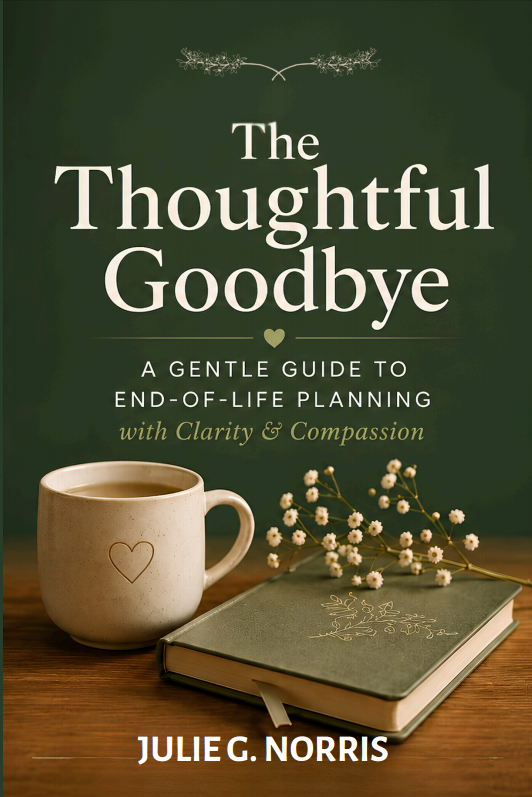
Yes, there is a whole chapter about the china
The Thoughtful Goodbye looks at the belongings families inherit, the things nobody wants, and the stories worth saving.
See what's inside the book →