You meant to decide what to do with the ashes. Then the funeral ended, the paperwork started, life kept moving, and the urn stayed on the mantle, bookshelf, closet shelf, or dresser.
Now it has been two years. Or seven. Or fifteen. That does not mean you failed to finish grieving or failed the person who died.
Is it okay to keep ashes at home permanently?
Many people do. There is no emotional deadline that requires you to scatter, bury, or inter cremated remains simply because time has passed.
Whether keeping ashes at home works for you is a personal and practical decision. Some people find the presence comforting. Others eventually feel as though the urn has turned into an unfinished task.
Why is it so hard to decide what to do with ashes?
The decision can feel permanent. Scattering ashes may mean you cannot gather them again. Burial can feel like another funeral. Dividing ashes among family members can raise questions nobody wants to argue about.
Sometimes the real reason the urn stays put is simple: doing nothing is reversible.
What are your options for cremated remains?
- Keep them at home in the current urn or another container.
- Place them in a cemetery grave or urn garden.
- Place them in a columbarium niche.
- Scatter them in a meaningful location where permitted.
- Divide them among family members.
- Use a small portion in memorial jewelry or another keepsake.
- Combine burial or scattering with a small family ceremony years after the death.
Rules for scattering depend on the land, water, cemetery, and jurisdiction involved. Check the requirements for the actual location before making plans.
Can you have a memorial or burial years later?
Yes. A delayed ceremony is still a ceremony. You can gather family later, read something, play music, share a meal, bury the urn, scatter ashes, or simply mark the decision.
The passage of time may even make it easier to choose something that reflects the person rather than making every decision during the first week of grief.
What if siblings disagree about the ashes?
Start by separating emotional preferences from legal authority. The person with lawful control over disposition may be defined by state law, estate documents, or prior arrangements.
Within the family, ask what each person is actually afraid of losing. One sibling may want a grave to visit. Another may want ashes scattered at a favorite place. Another may be uncomfortable with dividing remains. Those concerns can sometimes lead to a compromise, but not always.
What if you feel guilty for wanting the urn out of the house?
Moving the ashes does not move the relationship out of your life. You may simply be ready for your home to stop functioning as the place of final disposition.
You can choose a cemetery, scatter the remains, transfer them to another family member, or create a small memorial before making the change.
What if you feel guilty for wanting to keep them?
You do not need to perform closure for other people. If keeping the ashes feels right and is practical for your household, you can keep them.
It may be worth leaving written instructions about what should eventually happen to the urn after your own death. Otherwise, the next generation may inherit the same decision.
How do you finally make a decision?
Try replacing "What is the perfect thing to do?" with three smaller questions:
- Would I like the remains to have a permanent physical place?
- Does someone in the family want a place they can visit?
- Would keeping, scattering, burial, or another option feel most workable five years from now?
If nothing feels clearly right, you can also decide to wait another year. That is still a decision.
If you are planning ahead for your own ashes
Write down what you prefer and whether your family has flexibility. If you want scattering, name the place. If you want burial, identify the cemetery if possible. If you do not care, say that too.
Add the instruction to your end-of-life plan. Clear permission can be as useful as a firm preference.
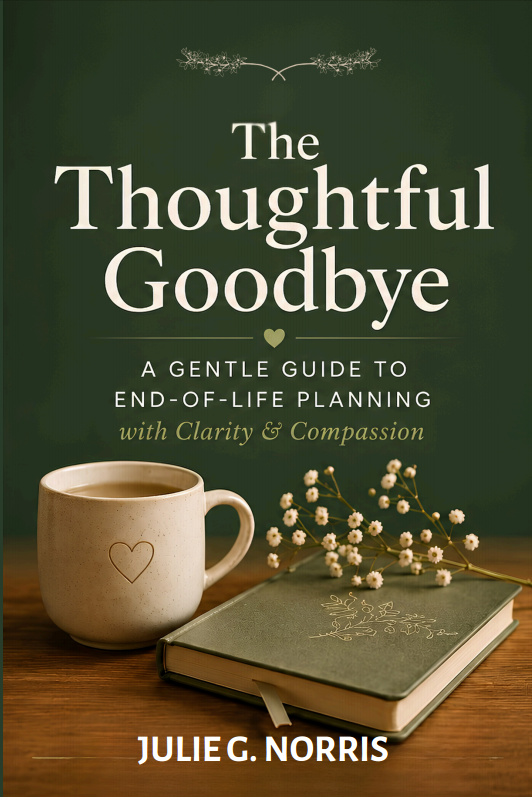
Some decisions are easier when you make them yourself
The Thoughtful Goodbye helps you record what you want and, just as importantly, where your family has permission to choose.
See what's inside the book →