If someone has just died and you do not know what you are supposed to do next, start with the circumstances of the death. The first call is different for an expected hospice death, a death in a hospital, and an unexpected death at home.
Most of the paperwork can wait. In the first hours, the priorities are confirming the death through the proper channel, arranging care of the body, looking after anyone or any animal who depended on the person, and securing the home and important information.
What should you do immediately after someone dies?
- Call the appropriate medical, hospice, facility, or emergency contact.
- Follow instructions for pronouncement, certification, or medical-examiner involvement.
- Identify the funeral home or disposition provider when you are authorized to do so.
- Make sure children, dependent adults, and pets are cared for.
- Secure the home, keys, medications, documents, and valuables.
- Tell a small number of close family or friends and ask one person to help notify others.
You do not need to sort belongings, close bank accounts, write the obituary, or plan every part of the funeral tonight.
Who do you call when someone dies at home?
If hospice is involved and the death was expected, call the hospice number in the care plan. Hospice will explain the next steps and who will confirm or pronounce the death.
If the death was expected but hospice was not involved, follow any instructions previously given by the person's physician or care team. If there is no plan and you are unsure what to do, call 911 or the appropriate local authority and follow their directions.
If the death was unexpected or the circumstances are unclear, call 911. Do not move the body or disturb the area unless you are instructed to do so.
What happens if someone dies in a hospital or care facility?
Hospital or facility staff handle the immediate medical and administrative steps and will tell the family what they need next. They may ask which funeral home or cremation provider should receive the person after release.
If arrangements were made in advance, locate them before choosing a different provider if circumstances allow.
How quickly do you have to choose a funeral home?
Someone may need to take the body into care relatively soon, but that does not mean you must decide the entire funeral immediately. Ask what you are authorizing, what the transportation or holding charges are, and whether signing anything commits you to additional services.
Under the FTC Funeral Rule, funeral providers must give consumers itemized price information and cannot require unnecessary goods or services as a condition of providing others. If you have time to compare providers, ask for prices before committing to a package.
Who needs to be told in the first day?
Usually, fewer people than you think. Start with immediate family, the people closest to the person who died, and anyone whose help you need right away.
Do not make yourself repeat the news twenty times. Ask one trusted person to contact extended family, friends, a faith community, neighbors, or coworkers.
What about children, dependent adults, and pets?
This is genuinely urgent. If the person who died cared for a child, dependent adult, or animal, make sure someone is safely covering that responsibility. For pets, gather food, medications, veterinary information, keys, and routine instructions if you can find them.
What should you secure at the person's home?
- Lock doors and windows and collect spare keys.
- Bring in mail and packages if the person lived alone.
- Do not throw away papers, notebooks, devices, or mail yet.
- Locate the will, prepaid funeral information, identification, insurance policies, and contact information if they are easy to find.
- Protect vehicles, medications, firearms, valuables, and sensitive records appropriately.
- Do not cancel utilities, home insurance, phone service, or email immediately. The estate may still need them.
How many death certificates do you need?
The number depends on the estate. Banks, insurers, courts, retirement plans, property transfers, and other organizations may have different requirements. Ask which places require a certified copy and which will accept another form of proof.
Funeral homes often help families order certified death certificates. State vital-records offices can also explain how to order additional copies later.
Do you need to notify Social Security?
Funeral homes generally report deaths to the Social Security Administration, so families usually do not need to report the death separately. Confirm that the funeral home will make the report. If no funeral home is involved or the death is not reported for some reason, SSA provides instructions for contacting the agency.
Eligible spouses, children, or dependent parents may also qualify for survivor benefits, which is a separate question from simply reporting the death.
What can wait until after the first 48 hours?
- Sorting clothes, furniture, and personal belongings
- Closing most accounts
- Detailed estate administration
- Thank-you notes
- A polished obituary
- Deciding what to do with every photograph, digital account, or keepsake
Some deadlines will eventually matter, but very little is improved by making permanent decisions while you are exhausted and still trying to understand what happened.
When should you write the obituary or plan the service?
When the immediate medical and transportation steps are settled, the family can begin thinking about the obituary, funeral, memorial, or celebration of life. If you need help, see how to write an obituary and celebration of life ideas.
If the person left a written plan, use it. If not, focus on the decisions that must be made and leave the decorative details for later.
If you are the person who plans ahead
The easiest way to help your family through these first hours is to leave clear information before they need it: who to call, which provider you prefer, where the documents are, who will care for pets, and what you want done with your body and service.
Our end-of-life planning checklist shows what to organize ahead of time.
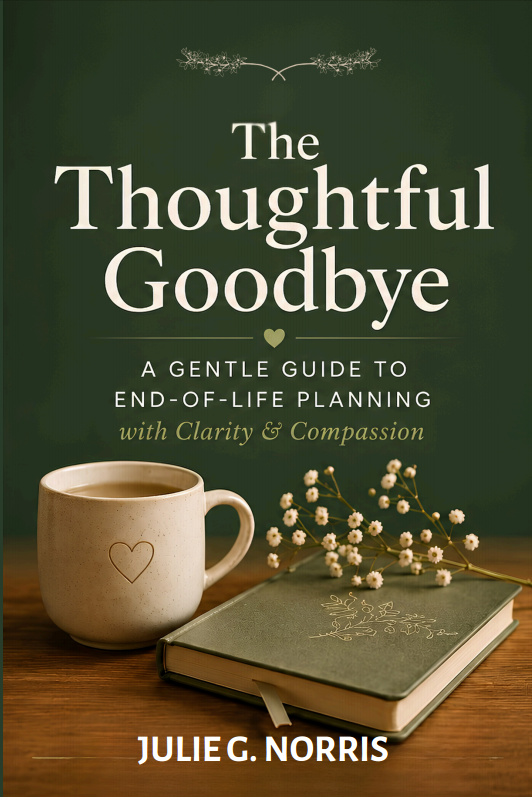
The first 48 hours are easier when someone left instructions
The Thoughtful Goodbye helps you organize the information your family may need before a crisis turns it into a scavenger hunt.
See what's inside the book →